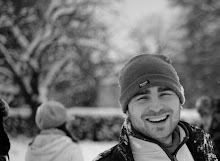
It was with a certain apprehension that I cycled from Bognor Regis to Brighton (not the Cornwall one, the proper one). I've never properly cycled anywhere, especially along main roads, and the A259 is not the best road to get your cycling wings on, as it were. The only sensible way out of Bognor is along the A259 into Littlehampton, and with little experience on the road I was nervous about doing it.
My trouble with travelling on the road alongside cars would not exist were I cycling in most other places in the world. I have a bad right eye which, alongside bad vision on the whole in that eye, gives me the no peripheral vision on the right-hand side. When cycling in Britain the cars come past you on the right, but my bad eye-sight makes me naturally apprehensive about anything passing me on that side: I cannot see it, I do not know its coming, and when I was younger this made me overly sensitive to riding on the roads. In Europe and elsewhere, of course, the cars pass on the left, and my left eye is perfectly capable of dealing with that kind of information. To give you an idea of what I am talking about; if you turn your head as far as it is able without moving the rest of your body, you can reliably see directly behind yourself, with my bad right eye I can only see in focus up till 100 degrees (0 being directly in front and 180 being directly behind). As my right eye is not as strong as my left my brain compensates the lack of clarity of the right by strengthening the importance of information coming from the left eye. When my eyes are turned to the right I quite literally get most of my vision blocked by a very close-up and very blurred image of my nose. The image is of course a composite, but as my right eye is incredibly short-sighted the only information that it can give is a very blurred image of what I really want to see - imagine a used sandwich bag draped over your eye and you get the picture.
Anyway, back to the journey. I got onto the A259 with a certain disappointment, it really wasn't as scary as I had imagined, but my first confrontation with a big roundabout quickly changed my perception of that. However, by following the car in front and keeping on a good line I quickly became accustomed to the the difficulties of the roundabout. To be honest, I acted more on instinct and at certain points I had to tackle a roundabout or two by really thinking about when to leave off from a standing position. Thankfully much of the road was devoid of traffic for the most part.
The road to Littlehampton was very enjoyable, very little traffic, and long and flat for ease of cycling. One of the odd things about cycling, or at least I've found, is that your perception of speed is really wierd. There were points on the trip where I was reaching 18, 19, 20 mph on flat road, yet there was not the same feeling of speed, it felt far slower about 12 or 13 mph. And indeed, in the opposite case, where the wind was blowing against me (which it liked doing, apparently), I, at times, felt that I was going far faster than I was actually going. Thank the Lord for Speedometers!
By the time I had reached Littlehampton I was feeling far more relaxed, though still a bit edgy. There had been a few cycle paths on the road, though these generally had a habit of taking me off on wild-goose chases, and then having to make my way back onto the road (usually at roundabouts) . . . it was far easier just to stay on the road rather than take them. I crossed the bridge into Littlehampton and my original plan was to cycle into Littlehampton and try and find my way across from Littlehampton into Ferring and Worthing along the Seafront, which would have taken me a far amount of time. However, I felt comfortable with continuing on the A259 so I kept with it and followed it all the way to Worthing.
There was a lovely bit along this route, where I encountered a traffic jam (due to who knows what!), and for about 5-10 mins I cycled down the hard shoulder sniggering at the unlucky drivers in there cars (the number of people who drive on their own! - what happened to the car-pool idea?) having to wait for everything to start moving again.
To cut a long story short, I found my way into Brighton (the ride from Worthing to Brighton is a lot longer than I imagined), stopped off at Tesco's for a sandwich (they seem to have different baguettes than they do in Canterbury) and sat down on the seafront for awhile munching on some ham, cheese and pickle sandwiches (mmm! tasty!) and feeling quite proud of myself.
I was on the road for 2 hrs and 30 mins, and what struck me most was that all that time I was being overtaken by cars (a lot). When you are in a car, you never realise how many cars are on the road because your speed is the same as everyone else's (or at least not far off), so there is never really a continuous stream of cars to see. You never see how many cars are on the road. As a cyclist the number of cars on the road was quite baffling. What were all these people doing!? Considering that the stretch of road I cycled on was about 30 miles, there are a lot of cars on the road, a lot of the time. Trying to change the driving habits of all those people seems a monumental task, and I can only imagine that it is even worse in America. To get all those people to cut back on their driving, to use public transport and other modes of transportation (such as bicycles or even their own feet), requires far more than making the buses and trains arrive on time. Seems almost impossible. However, I always remember this little fact about human travel, and it makes me feel a bit better:
"The typical American male devotes more than 1,600 hours a year to his car. He sits in it while it goes and while it stands idling. He parks it and searches for it. He earns the money to put down on it and to meet the monthly instalments. He works to pay for petrol, tolls, insurance, taxes and tickets. He spends four of his sixteen waking hours on the road or gathering resources for it . . . The model American puts in 1,600 hours to get 7,500 miles: less than five miles per hour. In countries deprived of a transportation industry, people manage to do the same, walking wherever they want to go, and they allocate only three to eight per cent of their society's time budget to traffic instead of 28 per cent. What distinguishes the traffic in rich countries from the traffic in poor countries is not more mileage per hour of life-time for the majority, but more hours of compulsory consumption of high doses of energy, packaged and unequally distributed by the transportation industry."
"Man, unaided by any tool, gets around quite efficiently. He carries one gram of his weight over a kilometre in ten minutes by expending 0.75 calories. Man on his feet is thermodynamically more efficient than any motorized vehicle and most animals. For his weight, he performs more work in locomotion than rats or oxen, less than horses or sturgeon. At this rate of efficiency man settled the world and made its history."
"Man on a bicycle can go three or four times faster than the pedestrian, but uses five times less energy in the process. He carries one gram of his weight over a kilometre of flat road at an expense of only 0.15 calories. The bicycle is the perfect transducer to match man's metabolic energy to the impedance of locomotion. Equipped with this tool, man outstrips the efficiency of not only all machines, but all other animals as well."
- Ivan D. Illich, Energy and Equity.
So there is hope for us yet.
Friday, 22 June 2007

Thursday, 21 June 2007
An Explanation
It is with great profundity that I open this blog to the public. Why? you may ask. If you do, the answer is, as it always is, I was bored and inspired at the same moment. Sitting down to a late morning cup of Teaffee and a copy of the Wednesday's Guardian (which I read because it is the newspaper of choice for both my parents), I was troubled by my lack of voice and creative output, both in the political but also in the philosophical realms (which at points may overlap). Blogging immediately came to mind and so I began here. I do not expect my voice (written as it is here) to be heard in any meaningful way, I have a far too cynical view of power - this is merely a place to vent my creative frustrations. I have no desire to record my life's details within these pages, though at times I may record events that seem pertinent to the post I am making, and so this should not be seen as a diary. I have tried keeping diaries in the past, but have always and completely failed to do so beyond the first few days: my interest in my own life does not translate well into a diary format.
The title and web address should be self-explanatory.
This is a joke. The title of the blog is taken from section 125 of Nietzsche's The Gay Science, an exciting passage entitled The Madman. The web address is the title of a chapter in Josiah Thompson's biography of Soren Kierkegaard, in reference to a diary entry by said poet and philosopher. Why these two references? Because both have had interesting effects on my own life and I have been studying both authors recently. At some future point I may seek to change both, as their influence wanes and another's waxes. But until then I am happy with both.
As a first post this will hardly contain any succulent morsels for those readers of mine to feast on, I hope I may furnish the table with a fuller selection of interesting delights for the palate. Perhaps my next post will be on taking a metaphor too far.
Foot
The title and web address should be self-explanatory.
This is a joke. The title of the blog is taken from section 125 of Nietzsche's The Gay Science, an exciting passage entitled The Madman. The web address is the title of a chapter in Josiah Thompson's biography of Soren Kierkegaard, in reference to a diary entry by said poet and philosopher. Why these two references? Because both have had interesting effects on my own life and I have been studying both authors recently. At some future point I may seek to change both, as their influence wanes and another's waxes. But until then I am happy with both.
As a first post this will hardly contain any succulent morsels for those readers of mine to feast on, I hope I may furnish the table with a fuller selection of interesting delights for the palate. Perhaps my next post will be on taking a metaphor too far.
Foot
Subscribe to:
Posts (Atom)